
How Cost Per Square Foot Really Impacts Your Build Timeline

Overview
Homeowners usually start with one number and expect a clean answer. A range they can plug into a calculator. A benchmark that tells them whether their project is realistic.
That’s understandable, and incomplete.
Cost per square foot matters, but not for the reason most people think. It doesn’t just influence the final price tag. It quietly dictates how long your home takes to build, how predictable the process feels, and where delays are most likely to surface.
This article explains how cost decisions shape the pace of construction, why cheaper builds often take longer than expected, and how smart budgeting protects both schedule and quality.
Table Of Contents
The Real Cost Per Square Foot in Today’s Market
Why Cost Per Square Foot Is a Planning Tool, Not a Quote
The Cost-Time Quadrant: Where Does Your Project Sit?
The Invisible Dollars: Soft Costs and the Planning Runway
How Lower Cost Per Square Foot Can Extend Your Timeline
How Higher Cost Per Square Foot Changes Scheduling
Materials, Labour, and Lead Times: Where Cost Meets Time
How J.T. Belavin Group Aligns Cost and Timeline
The Bottom Line on Cost, Time, and Control
FAQs
The Real Cost Per Square Foot in Today’s Market
Cost per square foot varies widely because no two custom homes share the same inputs. Land conditions, jurisdictional requirements, labour markets, and design ambition all push the number up or down.
A streamlined custom home with efficient design and standard materials may land closer to the lower end of the range. A highly detailed residence with custom millwork, specialty finishes, and complex architecture quickly pushes beyond it.
The mistake homeowners make is treating this number as a pricing shortcut instead of what it actually is: a high-level planning signal.

Grab Your Free Copy of:
“The Complete Buyer’s Guide to Building a Custom Home in Ontario”
Why Cost Per Square Foot Is a Planning Tool, Not a Quote
Cost per square foot helps frame expectations early. It doesn’t define the outcome.
That number compresses hundreds of decisions into a single average. It can’t show which dollars drive complexity, which ones introduce risk, or which ones protect your schedule.
Two homes can share the exact cost per square foot and follow completely different build timelines. The difference comes down to where the money goes and when decisions get made.
The Cost-Time Quadrant: Where Does Your Project Sit?
The biggest question people ask when starting a project is, “how long does building a house take?”
So to answer that, you need to understand your timeline by looking at the intersection of Customization and Sourcing. We find that most home build timelines and projects fall into one of four categories that define the pace of work:
High Cost / High Speed: This usually involves premium off-the-shelf luxury materials and a massive, highly coordinated labour force. Think of a high-end build with standard-sized components and top-tier finishes.
High Cost / Long Timeline (The Bespoke Category): This is where you find imported stone, hand-carved millwork, and one-of-a-kind structural engineering. These projects take longer because the workable hours per square foot are significantly higher.
Lower Cost / High Speed: Efficient, repeatable designs (often referred to as production or semi-custom builds).
Lower Cost / Long Timeline (The Danger Zone): This occurs when budget constraints force the use of trades who are overbooked or materials that are prone to supply chain shocks. When a project lacks the budget to buy its way out of a delay, it simply must wait.

The Invisible Dollars: Soft Costs and the Planning Runway
When people ask about cost per square foot, they are almost always thinking about the Hard Costs, such as the lumber, concrete, and countertops they can see and touch.
However, the Soft Costs (architecture, engineering, and permitting) typically dictate the first six months of your timeline.
High-complexity builds require specialized structural, mechanical, and envelope engineering.
If a homeowner under-invests in this phase to save on the per-square-foot price, the result is often a set of plans that require constant Field RFIs (requests for information that are formal queries from the builder back to the architect that can stall a site for days while waiting for an answer) once construction starts.
The J.T. Belavin Strategy: Spending more on the intellectual square footage early on is the single best way to ensure the physical square footage finishes on schedule.
We invest heavily in coordinating these soft costs so that by the time we break ground, every clash between a steel beam and an HVAC duct has already been resolved on paper.

How Lower Cost Per Square Foot Can Extend Your Timeline
Many homeowners assume a lower cost automatically means a faster, simpler build. In practice, the opposite is frequently the case.
Lower budgets limit flexibility. They reduce the margin for error. They force harder trade-offs when conditions change. When a material goes on backorder or labour availability shifts, budget-constrained projects struggle to adapt without delay.
Cheaper materials also don’t always install faster. Some require more site labour, more prep work, or tighter tolerances that slow progress. When pricing leaves no room for substitution, schedules wait.
Cost pressure also affects decision-making. Homeowners take longer to approve changes, compare alternatives, or renegotiate scope. Each pause feels small. Together, they significantly extend the home-building timeline.
How Higher Cost Per Square Foot Changes Scheduling
Higher cost per square foot introduces different challenges.
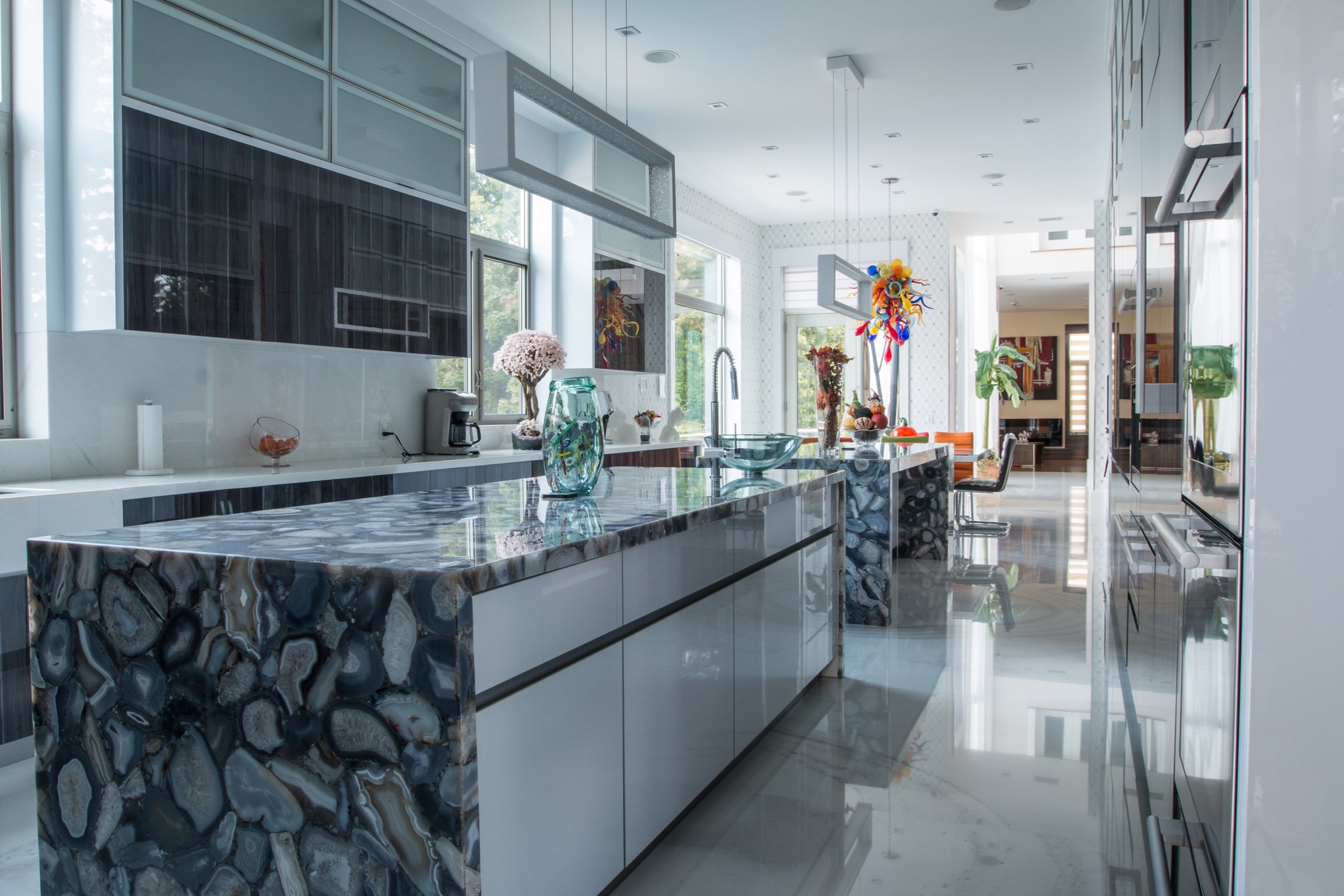
Premium materials frequently come with longer lead times. Custom windows, imported stone, bespoke cabinetry, and specialty fixtures require early commitment. Miss the ordering window, and construction waits.
Specialized labour also affects the pace. Skilled tradespeople who handle high-end finishes work deliberately. They don’t rush, and they shouldn’t. Precision protects value, but it requires realistic scheduling.
Materials, Labour, and Lead Times: Where Cost Meets Time
Cost and time intersect most clearly in procurement.
Every material decision carries a timeline implication. Standard products move quickly but offer limited flexibility. Custom selections elevate the result but require earlier coordination.
Labour markets matter just as much. Regions with skilled trade shortages experience longer schedules regardless of budget. Projects that plan trades early and sequence work intelligently avoid stop-start momentum that kills efficiency.
When cost planning ignores these realities, the timeline absorbs the shock.
How J.T. Belavin Group Aligns Cost and Timeline
This is where our integrated approach provides the most value. Rather than treating cost and schedule as separate conversations, we evaluate every design choice for its total impact.
If a client selects a rare marble from an Italian quarry, we don’t just quote the price per square foot. We provide a Timeline-Impact Assessment:
“This stone adds $15,000 to the budget, but it also adds 6 weeks to the procurement schedule. Do we have a storage solution, or should we adjust the sequence of the flooring install?”
By aligning these variables, we remove the surprises that usually lead to budget creep and schedule bloat, ensuring your investment remains a managed, predictable process.
The Bottom Line on Cost, Time, and Control
Cost per square foot doesn’t tell you how long your home will take to build. Your decisions, planning discipline, and project management structure do.
Estimating cost per square foot is the beginning of the conversation, but aligning that investment with a realistic timeline is where the real work begins.
If you’re ready to build with a team that prioritizes predictability, transparency, and craftsmanship, we invite you to reach out.

Ready to start your project but don’t know where to begin?
Send me a message and let’s have a chat about your vision.
Frequently Asked Questions About GTA Home Building Timelines
-
Most custom homes fall between $300 and $700+ per square foot, depending on location, design complexity, and material selections.
-
Not necessarily. Higher-end materials often require longer lead times and specialized labour, which can extend timelines without proper planning.
-
Tighter budgets reduce flexibility, slow decision-making, and limit substitution options when materials or labour become unavailable.
-
Cost influences material lead times, labour coordination, and decision speed, all of which directly impact schedule predictability.
-
Yes. Proactive planning, early procurement, and centralized oversight help align cost decisions with realistic timelines.