
Renovate vs. Move: The Hidden Fees That Kill Value in Toronto

Homeowners expect a clear financial comparison when evaluating renovating vs. moving. A simple calculation, like sell for X, buy for Y, and renovate for Z.
But what rarely gets calculated properly is the cost of movement itself — the structural capital loss that occurs the moment you list your home and re-enter the market as a buyer.
Transaction costs in Toronto permanently destroy equity with double land transfer tax, real estate commissions, legal fees, luxury tax exposure, moving costs, mortgage penalties, staging, bridge financing, and the list goes on.
For many clients who initially contact a custom home builder in Toronto asking “how much does it cost to build a house?”, the smarter first question is actually this:
“Are you about to lose six figures just by moving?”
This article explains how selling and rebuying erode capital, why “selling low and buying low” remains a losing strategy, and how renovation protects lifestyle and long-term wealth.
Table Of Contents
In today’s Toronto market, selling and rebuying a home can destroy hundreds of thousands of dollars in equity through double land transfer tax, real estate commissions, luxury taxes, and closing costs.
Renovation, whether structured as turnkey renovations or a full-scale luxury custom home transformation, keeps capital within the property, preserving location and long-term value rather than returning cash to the system.
The True Cost of Selling and Rebuying in Toronto
When homeowners evaluate a move, they focus on the sale price and purchase price. They rarely focus on friction. And in Toronto, friction is expensive.
A typical move triggers:
Real estate commission (often 4–5% total)
HST on commission
Legal fees (sell and buy)
Staging and prep costs
Mortgage penalties or refinancing fees
Moving expenses
Bridge financing if timing misaligns
Land transfer tax — twice
This isn’t theoretical. For a $1.5M home sale and repurchase, transaction costs can easily exceed $150,000–$200,000, depending on the structure and timing.
That money doesn’t improve your lifestyle, upgrade your finishes, or increase square footage. It just…disappears.
Many homeowners assume moving is easier than managing a home-building timeline or coordinating with home builders in the GTA, but financially, that assumption rarely holds.
Why “Selling Low and Buying Low” Still Loses
Many homeowners rationalize moving during market softness with this logic:
“If I sell low, I’ll also buy low. It balances out.”
It doesn’t. Transaction costs are percentage-based. They scale with value. Whether the market is up or down, you still pay commission on the sale price, pay land transfer tax on the purchase price, and pay legal and closing costs.
Even in a “balanced” market, you reset your capital position by tens or hundreds of thousands of dollars. The market may fluctuate, but transaction costs don’t. They’re immediate and irreversible.
Double Land Transfer Tax: The Silent Equity Killer
Toronto is unique in one critical way: you pay land transfer tax twice.
Once to Ontario. Once to the City of Toronto.
On a $2M property, the combined land transfer tax can exceed $70,000 before you’ve even unpacked a single box.
For homeowners exploring whether to buy land and build a house or relocate entirely, this double taxation is often the hidden variable that shifts the math back toward renovation.
Unlike working with a residential home builder to improve your existing property, the land transfer tax converts equity into a receipt. It doesn’t compound or appreciate.
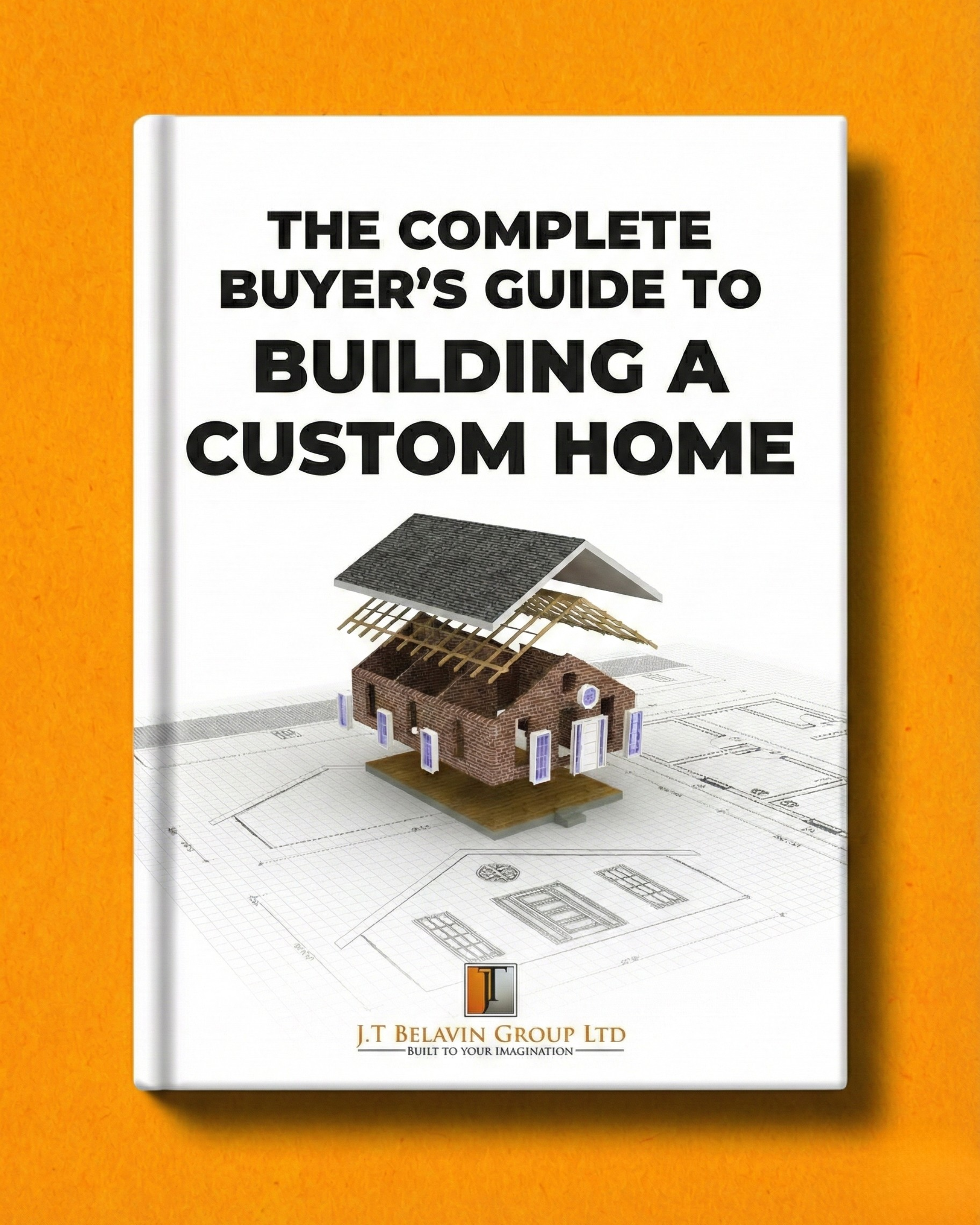
Grab Your Free Copy of:
“The Complete Buyer’s Guide to Building a Custom Home in Ontario”
Commission Leakage vs. Retained Capital
Commission is often framed as “the cost of doing business.” But from a capital perspective, it’s leakage.
On a $1.8M sale with 5% commission, you spend $90,000 in commission. Plus HST. Plus legal fees. You’re approaching six figures before you even buy again.
Those six figures could fund:
A full kitchen transformation
Structural reconfiguration
Basement underpinning
A significant addition through a luxury custom home builder in Toronto
High-performance window upgrades
Exterior re-cladding
When you move, that capital permanently leaves your property. Once renovated, it remains embedded in the asset. One creates friction. The other builds equity.
The Luxury Tax Reality in Today’s Market
For higher-end buyers, the math gets even heavier.
Clients speaking with custom home builders in the GTA often discover that upgrading within their existing property avoids triggering new tax layers tied to higher purchase thresholds.
Renovating, on the other hand, upgrades your lifestyle without resetting your tax exposure through a new transaction. In a high-price market like Toronto, that distinction matters.
Transaction Costs Are Permanent. Renovations Are Not.
Here’s the core financial difference: Transaction costs are sunk forever. Renovation costs convert into property value.
Even if a renovation doesn’t return 100 cents on the dollar immediately, the capital remains inside the asset. It improves livability, marketability, appraisal value, and long-term resale strength.
You’re essentially reinvesting in the same appreciating vehicle. Moving extracts capital from that vehicle and hands it to intermediaries. In wealth-building terms, that’s backwards.
Lifestyle Stability vs. Financial Reset
Money is one side of the equation. Lifestyle is the other. When you move, you reset:
School districts
Community ties
Commute routes
Neighbour relationships
Familiar infrastructure
Renovation preserves the intangible equity of location. And in Toronto, location isn’t easily replicated. You can change walls, but you can’t easily replicate a street, block, or community dynamic that took years to build.
That’s why many homeowners opt for Toronto design-build services rather than re-entering the transaction cycle. Renovation protects financial and lifestyle capital.

Renovation as a Capital Preservation Strategy
The smartest homeowners aren’t chasing square footage. They’re preserving leverage.
Instead of paying $200,000 in transaction friction, they redeploy that same capital into structural additions, open-concept redesign, energy upgrades, luxury interior transformations, and income-generating secondary suites.
The capital stays working.
This is where professional construction management matters. Renovation only beats moving if you:
Clearly define the scope
Control the budget
Set a realistic timeline
Coordinate the trades
Secure the permits properly
Without discipline, renovation can drift. With structure, it becomes a strategic reinvestment.
How J.T. Belavin Group Helps You Keep Money Working in the Property
Renovation is only smart if executed properly.
At J.T. Belavin Group, we approach projects through a capital-efficiency lens to:
Assess whether renovation or rebuild delivers stronger long-term value
Align scope with realistic budgets upfront
Manage zoning, permits, and trade coordination internally
We provide centralized project management so clients don’t absorb execution risk.
Our role is to help you avoid unnecessary transaction losses and ensure that any reinvestment strengthens the asset rather than drains it.
When renovation is structured properly, it becomes a strategic alternative to moving — not a compromise.
The Bottom Line on Transaction Avoidance
Moving feels proactive. But in Toronto’s current environment, it’s often financially regressive. Double land transfer tax, commission leakage, luxury exposure, and closing friction don’t build wealth; they erode it.
Renovation keeps capital inside the property. It protects location, preserves equity, and upgrades lifestyle without resetting your financial position.
If you’re weighing renovation versus moving, don’t just compare price tags. Compare capital retention. That’s where the real decision lives.

Ready to start your project but don’t know where to begin?
Send me a message and let’s have a chat about your vision.
Frequently Asked Questions
-
In many cases, renovation preserves more capital because selling and rebuying triggers land transfer tax, commission, and closing costs that permanently reduce equity.
-
Buyers pay both the Ontario and Toronto municipal land transfer tax. On higher-value homes, this can total tens of thousands of dollars, depending on purchase price.
-
No. Transaction costs are percentage-based and apply regardless of market conditions. Even in a balanced market, fees still permanently reduce your capital.
-
Moving may make sense if the property has structural limitations, zoning constraints, or location issues that a renovation cannot resolve cost-effectively.
-
Strategic renovations that improve layout, functionality, and long-term desirability often strengthen resale value while keeping capital embedded in the asset.