
The Cost Traps in Custom Luxury Home Builds
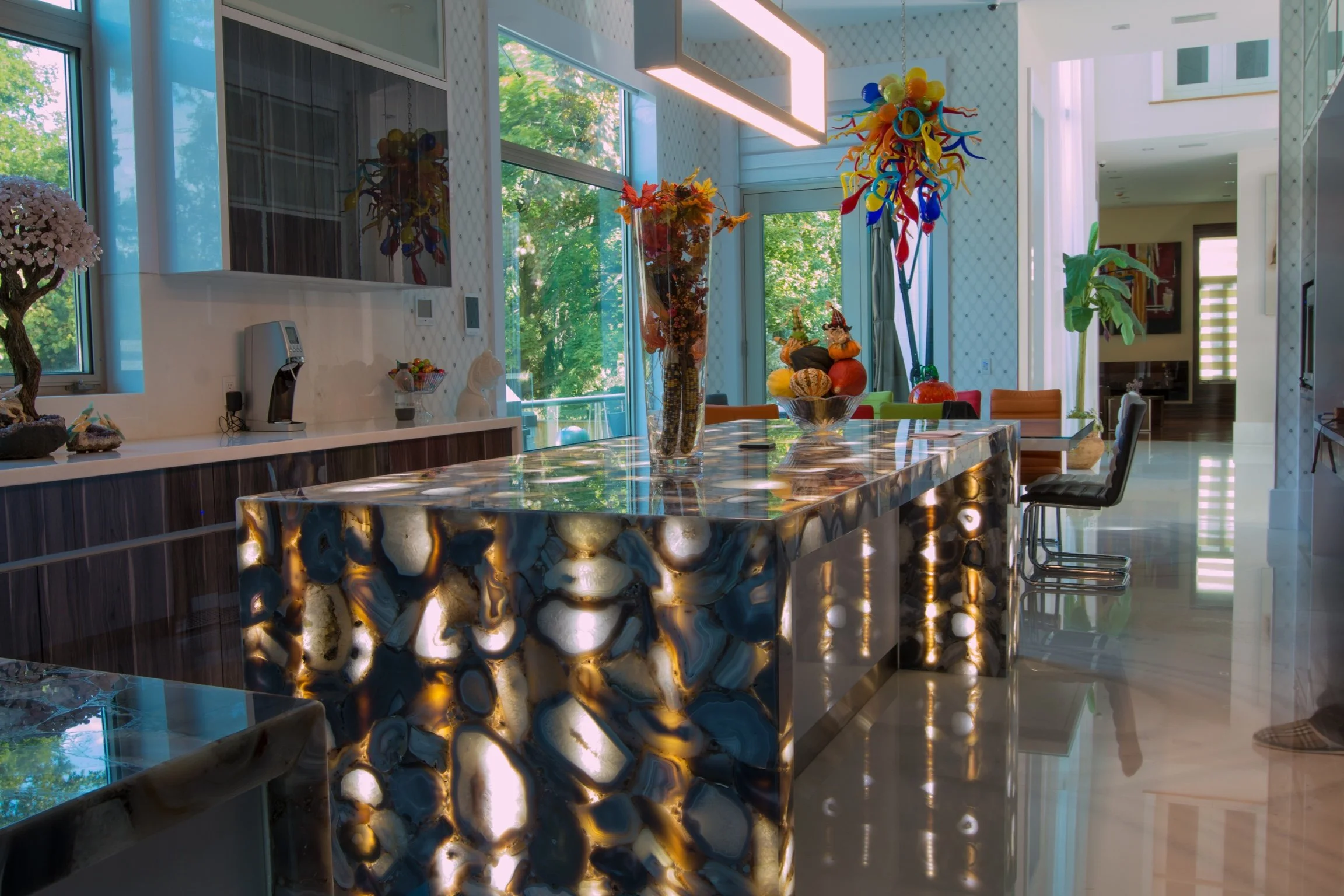
Why Do Luxury Homes Blow Past Budgets?
High end home builds do not lose control because clients are careless. They lose control because cost exposure is introduced early and ignored until it becomes permanent. Luxury magnifies weak systems rather than protecting against them.
Here at J.T. Belavin Group, over years of building complex custom homes, the same cost traps appear again and again. They show up regardless of budget size, design quality, or experience level.
Below are the ten most damaging traps ranked from least obvious to most destructive.
Table Of Contents
Why Luxury Homes Blow Past Budgets
Cost Trap 10: Confusing Luxury with Materials
Cost Trap 9: Blaming Client Changes for Overruns
Cost Trap 8: Design Detached from Construction Reality
Cost Trap 7: Allowances Masquerading as Certainty
Cost Trap 6: The Illusion of Fixed Pricing
Cost Trap 5: Fragmented Accountability
Cost Trap 4: Poor Sequencing That Turns Time into Money
Cost Trap 3: Emotional Decisions Disguised as Flexibility
Cost Trap 2: Assuming Higher Spend Equals Higher Quality
Cost Trap 1: Drift
Why J.T. Belavin Group Is Built to Eliminate These Cost Traps
FAQs
Cost Trap 10: Confusing Luxury with Materials
Luxury is often mistaken for expensive finishes. Marble, imported fixtures, and custom millwork do not define luxury on their own. Precision does.
When planning, communication, and execution lack clarity, complexity replaces predictability. High end materials amplify mistakes rather than hiding them. If no one can clearly explain how a decision affects labor, sequencing, or long term risk, it is decoration, not luxury.
Cost Trap 9: Blaming Client Changes for Overruns
Clients are often blamed for budget overruns because they change their minds. Change itself is not the problem. Unstructured change layered onto weak planning is.
Luxury homes evolve. That evolution only becomes expensive when there is no system designed to absorb it. Planning for change creates stability. Pretending change will not happen creates chaos.

Grab Your Free Copy of:
“The Complete Buyer’s Guide to Building a Custom Home in Ontario”
Cost Trap 8: Design Detached from Construction Reality
This trap begins during design. Architects are encouraged to push boundaries, especially in luxury work. What looks extraordinary on paper often carries invisible structural, labor, and sequencing consequences.
Without real time construction input, budgets become theoretical. Pricing turns reactive. This is where overruns are born, long before construction starts.
Cost Trap 7: Allowances Masquerading as Certainty
Allowances feel safe, but they are placeholders for unanswered questions. Every vague line item represents future exposure.
Some allowances are unavoidable due to true variables. Others exist because decisions were deferred. Knowing the difference is where cost control actually begins. Clarity protects budgets. Comfort does not.

Cost Trap 6: The Illusion of Fixed Pricing
Fixed price contracts feel reassuring. They are only as strong as the scope behind them.
If scope is not precisely defined, the price is fixed only until reality intervenes. In luxury builds, customization increases the pressure on documentation. Fixed pricing shifts risk rather than eliminating it when foresight is weak.
Cost Trap 5: Fragmented Accountability
Architects design. Builders build. Engineers engineer. Everyone performs their role, yet no one owns the outcome.
When issues arise, responsibility falls into the gaps. Each party is technically correct, and the homeowner absorbs the cost. Integrated ownership solves problems. Fragmentation debates them.
Cost Trap 4: Poor Sequencing That Turns Time into Money
Time is expensive in luxury construction, even when nothing goes wrong. Specialized trades operate on tight schedules. Missed windows create cascading delays.
Most sequencing failures stem from optimistic timelines created to win projects rather than deliver them. Slow, disciplined planning creates fast construction. Rushed planning creates slow, expensive builds.
Cost Trap 3: Emotional Decisions Disguised as Flexibility
Being told to decide later sounds flexible. It is one of the most expensive strategies available.
Late decisions compress timelines, remove pricing leverage, and force rushed procurement. Money leaks quietly through premiums paid just to protect schedules. Choice without structure creates exposure, not freedom.
Cost Trap 2: Assuming Higher Spend Equals Higher Quality
Higher cost does not guarantee higher quality. Oversight does.
High end materials installed poorly still fail. Complex systems coordinated poorly still break. Daily leadership matters because problems caught early are manageable. Problems discovered after finishes are installed are devastating.
Cost Trap 1: Drift
The most expensive luxury homes are not the most ambitious. They are the ones that drift.
Drift occurs when no one is empowered to slow decisions down, force clarity, or say no. Choices get approved out of fatigue. Risks stay hidden. Costs compound quietly. Every trap on this list exists because drift was allowed to take hold.
Why J.T. Belavin Group Is Built to Eliminate These Cost Traps
At J.T. Belavin Group, avoiding cost traps is not a promise. It is the byproduct of how we operate.
Most luxury projects fail quietly because no one is responsible for aligning land, design, budget, and execution in real time. Our process is built around eliminating that gap.
We work with clients earlier, slower, and more deliberately than most firms, because leverage is highest before decisions become expensive.
Design never lives in isolation. Construction realities are integrated from the beginning so pricing is grounded, sequencing is intentional, and customization does not turn into volatility.
Budgets are treated as decision frameworks, not optimistic targets, which gives clients clarity on tradeoffs before money is committed.
Clients are not left managing complexity or mediating between professionals. There is one accountable team owning outcomes, communication, and momentum.
That accountability is supported by daily leadership on site, where issues are addressed when they are small and inexpensive.
The result is not fewer decisions. It is better decisions made earlier, with structure, transparency, and control. That is what turns a luxury build from a financial risk into a confident investment.

Ready to start your project but don’t know where to begin?
Send me a message and let’s have a chat about your vision.
Frequently Asked Questions About GTA Luxury Home Costs
-
Because hidden cost traps are introduced early through weak planning, unclear scope, and fragmented accountability.
-
Only if the scope is fully defined. Fixed pricing without clarity simply shifts risk instead of eliminating it.
-
Before major design and land decisions are finalized, when cost control and alignment still have leverage.
-
Not always. Allowances tied to true variables are normal. Allowances caused by deferred decisions create exposure.
-
Oversight. High end materials fail without coordination and daily leadership.